Flexible and Highly Automated
FBH Uses Schröder Folding Machine for Flexible Sheet Metal Production
Customer
The Fottner Group is a service provider specializing in metalworking, sheet metal processing, tube processing, assembly production and powder coating. A modern machine fleet ensures the flexibility required to meet a wide range of customer demands. In sheet metal processing, the MAK 4 Evolution UD folding machine plays a particularly important role. (https://www.fbh-gmbh.de/)
The core business of the sister companies FBH Fertigungsbetrieb für Betriebstechnik GmbH and FFP Pulverbeschichtungs GmbH, based in Hilgertshausen in the Upper Bavarian district of Dachau, includes sheet metal laser cutting, tube laser cutting, press brake bending, tube bending, profile processing, welding and powder coating. Managing Director Andreas Fottner relies on a high level of vertical integration, enabling the companies to supply customers from a wide variety of industries with individual parts, series-produced components and complete system solutions. When an older bending center, which had been capable of automatically bending sheets up to 2 mm thick, was taken out of service, it left a gap in the company’s machine fleet. Large sheets in particular could only be handled on the press brake by two operators.
An Eye-Catcher at the Trade Fair
When Andreas Fottner looked around for his three colleagues at Blechexpo 2023 in Stuttgart, he noticed that they had stopped at the Schröder Group booth and were impressed by the generous clearance offered by one of the folding machines.
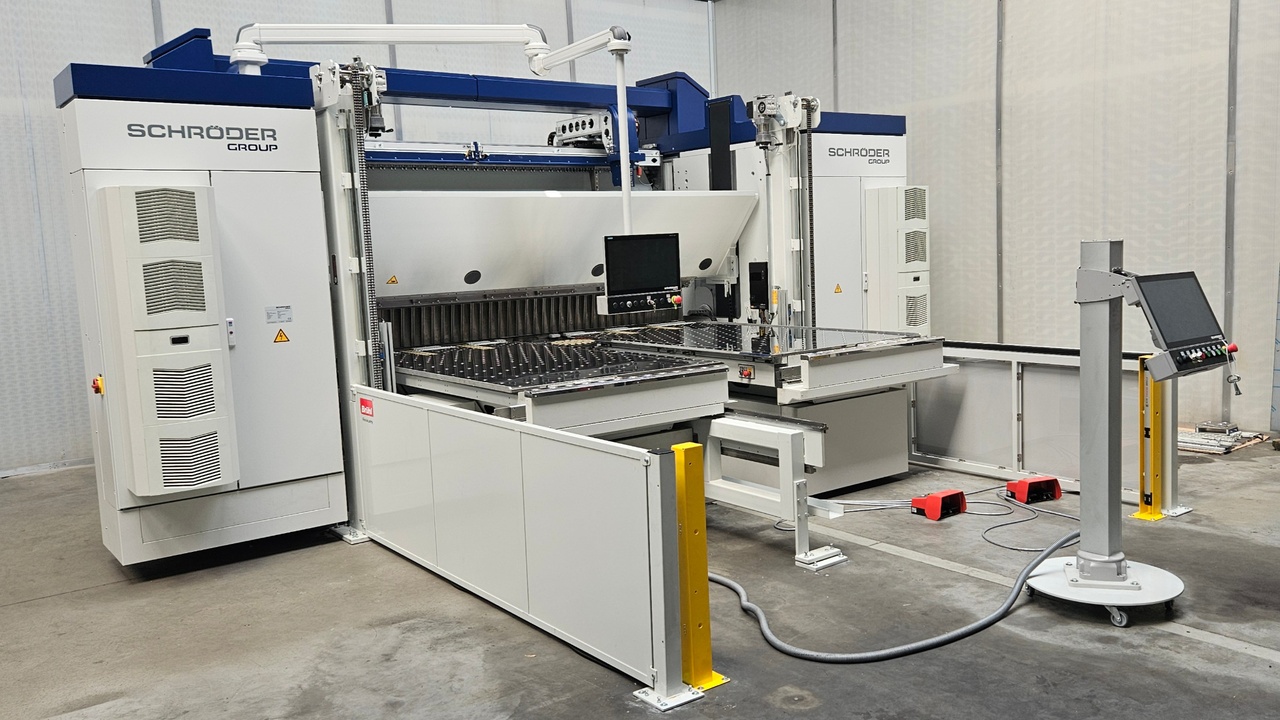
The team decided to take a closer look at the machine: the MAK 4 Evolution UD. Its 1,090 mm clamping beam stroke was not the only feature that impressed them. With a working length of 3,240 mm, the machine processes sheets up to 6.0 mm thick. Thanks to the up-and-down folding beam, bends can be performed both upwards and downwards. This means that the sheet does not have to be turned over for reverse bends. This was an important feature, as Fottner was specifically looking for a machine that would allow large sheets to be processed by a single operator. Other equipment features were equally convincing. “For us, it was clear that if we were going to invest in another folding machine, it had to enable partially automated series production while offering considerably more flexibility in terms of sheet thicknesses and handling than our previous machine,” explains Fottner.
Practical Testing Confirms the Decision
To make sure that their first impression was correct, Fottner accepted the Schröder team’s offer to bend sample parts. He also took up the opportunity to visit a contract manufacturer in the Upper Palatinate and see the machine in everyday production. The company, which handles comparable jobs, had already been using the MAK 4 Evolution UD successfully for around four years. When the sample parts produced by Schröder arrived, the conclusion was clear: the machine could do exactly what was expected of it — and with excellent repeatability.
Efficient Processes
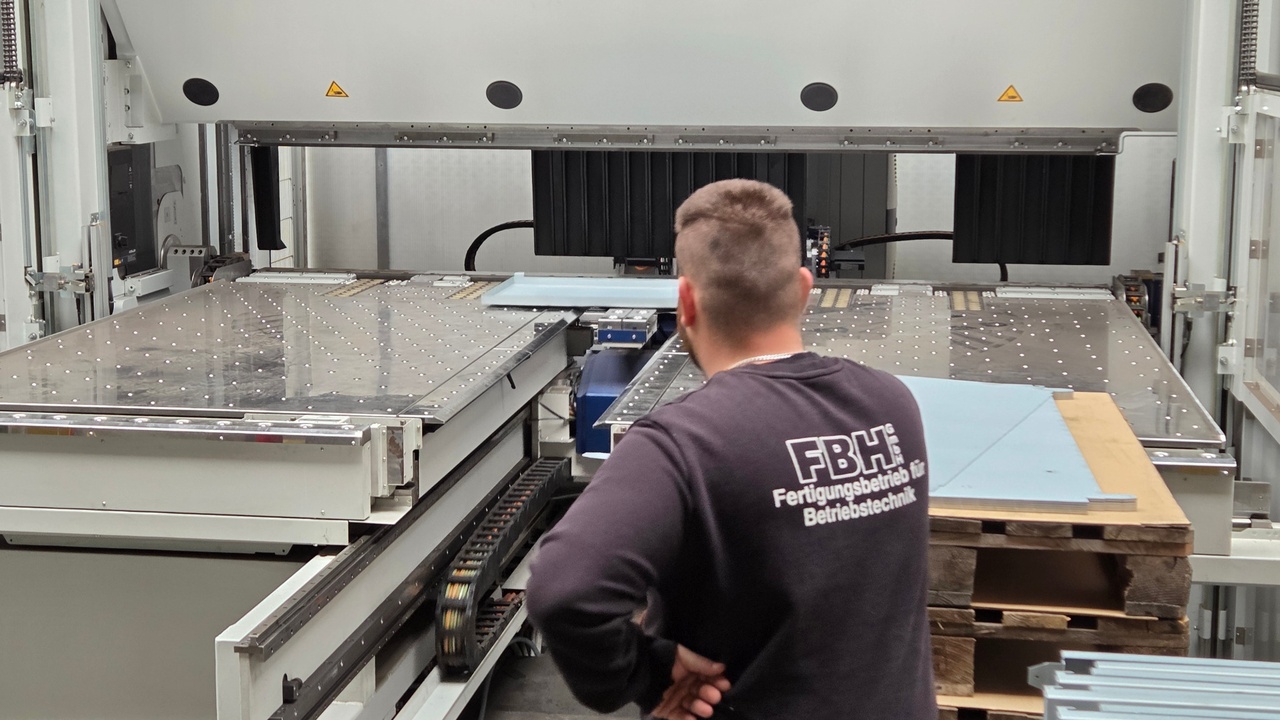
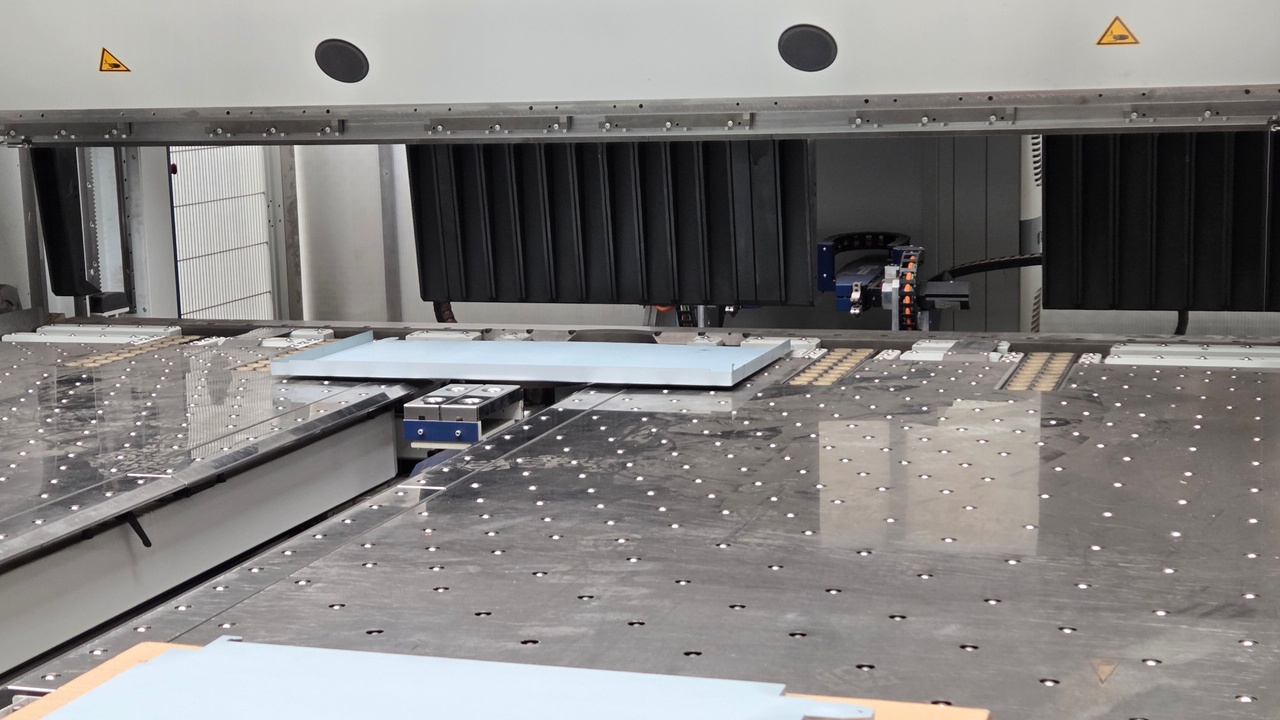
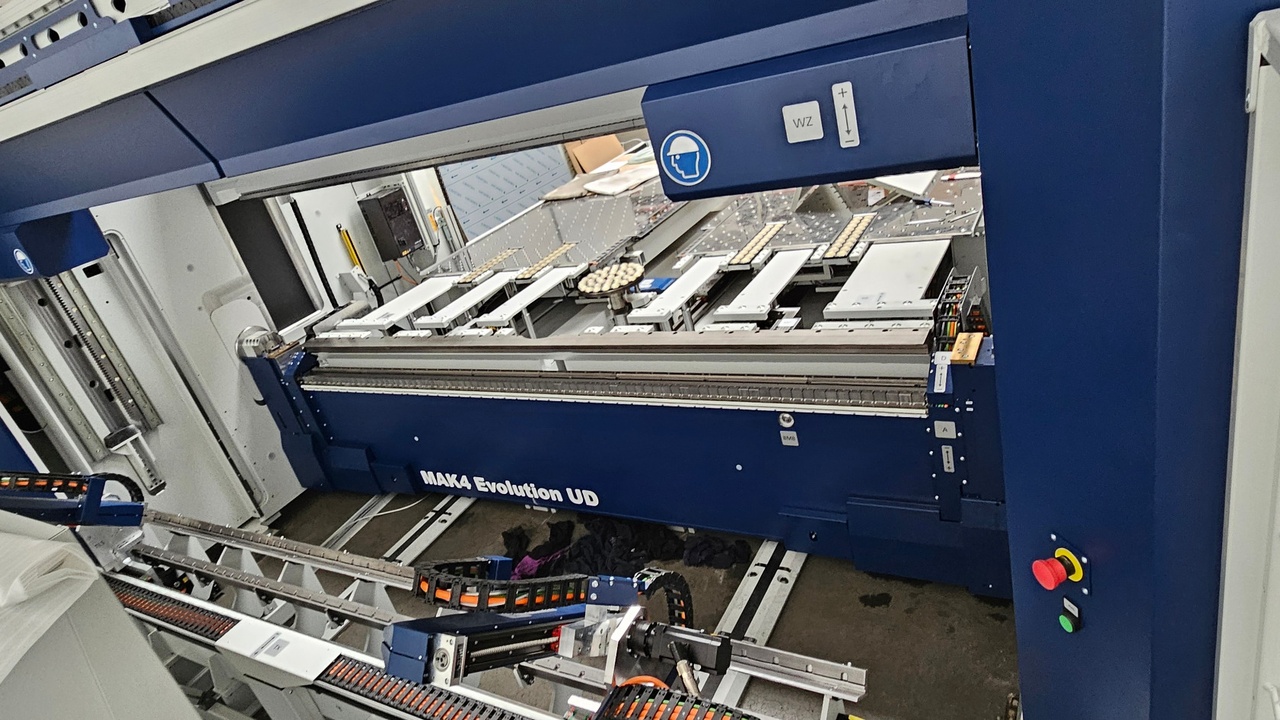
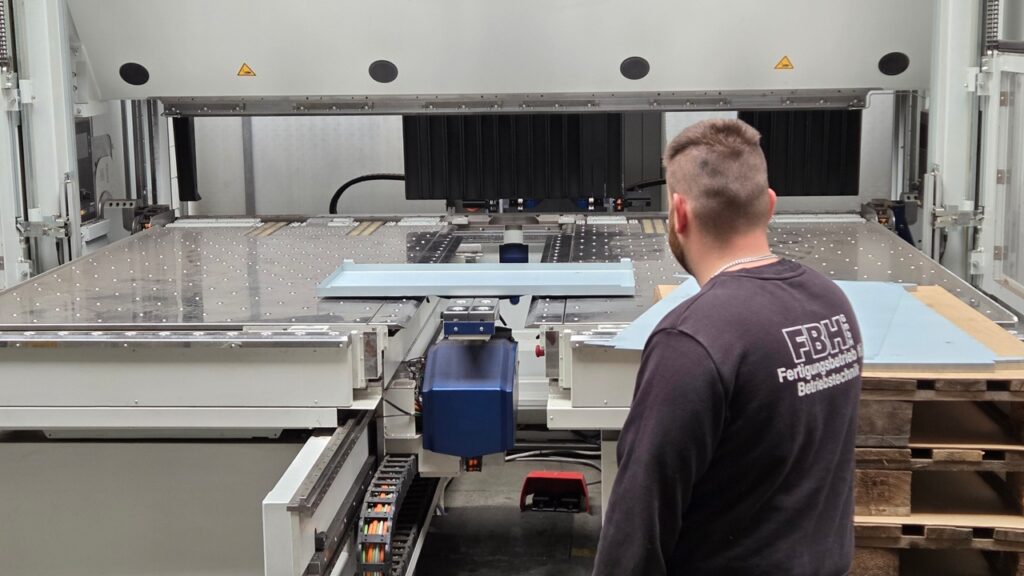
FBH Fertigungsbetrieb für Betriebstechnik received the MAK 4 Evolution UD in a fully equipped configuration. The equipment includes automatic tool changers for the clamping beam and folding beam, the previously mentioned up-and-down folding beam, as well as the Advanced Handling System (AHS), a fully automatic rotating table equipped with suction cups. Combined with the POS 3000 3D graphical control, the AHS forms the basis for extensive automation. Supported by a pneumatic lifting device, the operator places the sheet onto the back gauge table and positions it once against the gauge pins at the end of the table. From that point onward, the Advanced Handling System takes over. The advantage is that the entire bending program can then be completed automatically. At FBH, the programs are created on a PC during work preparation and transferred to the machine via the company network.
Efficient for Both Series Production and Individual Parts
Thanks to its automatic tool changers, the Schröder folding machine is ideally suited for rapid changeovers between individual parts and small batches. Nevertheless, FBH naturally aims to produce batch sizes that can also be handled efficiently during subsequent processing operations. “Most of our series range from 10 to 150 parts, often produced in batches called off under framework agreements,” explains Fottner. Around 90 percent of the material processed is steel with thicknesses between 1 and 4 mm, while stainless steel and aluminum are also processed from time to time.
The company primarily manufactures housings — which is precisely why the generous clearance provided by the clamping beam stroke was so important. These housings are used, for example, in self-service car vacuum cleaners, paint mixing systems, compressors and construction machinery. The automated processing enabled by the rotating table offers such significant advantages that some cutouts are initially only perforated and are not completely removed until after bending. This ensures that sufficient surface area remains available for the suction cups to securely grip the sheet. FBH employs 85 people, working a 40-hour, four-day week, predominantly in a single-shift operation. Only the laser cutting department operates two shifts, with welding also running additional shifts when required. Because flexibility is a decisive competitive advantage in contract manufacturing, it is important for FBH to be able to create additional production capacity at short notice — including on the MAK 4 Evolution UD.
“We were already familiar with the advantages of an industrial folding machine. However, in the past, limited clearances and the restriction to sheet thicknesses of just 2 mm meant that we were nowhere near as flexible as we are today with the Schröder machine. Being able to respond individually and at short notice to customer requirements is extremely important to us, and the MAK 4 makes an important contribution to this flexibility,” says Fottner.Around two years after visiting another Schröder customer to see the machine in everyday production, FBH itself has become a reference customer. In April 2026, FBH Fertigungsbetrieb für Betriebstechnik was one of the stops on a tour of Germany organized by the Schröder Group’s US sales partner for a group of customers, giving them the opportunity to experience “German excellence in sheet metal working” firsthand.
Machine used
MAK 4 Evolution UD
- Folding machine for sheet thicknesses up to 6.0 mm (400 N/mm²)
- 3240 mm working length
- 1090 mm clamping beam stroke
- Graphic control POS 3000 3D
- Folding beam adjustment 180 mm
- Fully automatic tool changer for clamping beam and folding beam tools
- AHS rotating table back gauge for more flexible handling, allowing both automatic and manual operation