Precision opened up unexpected possibilities
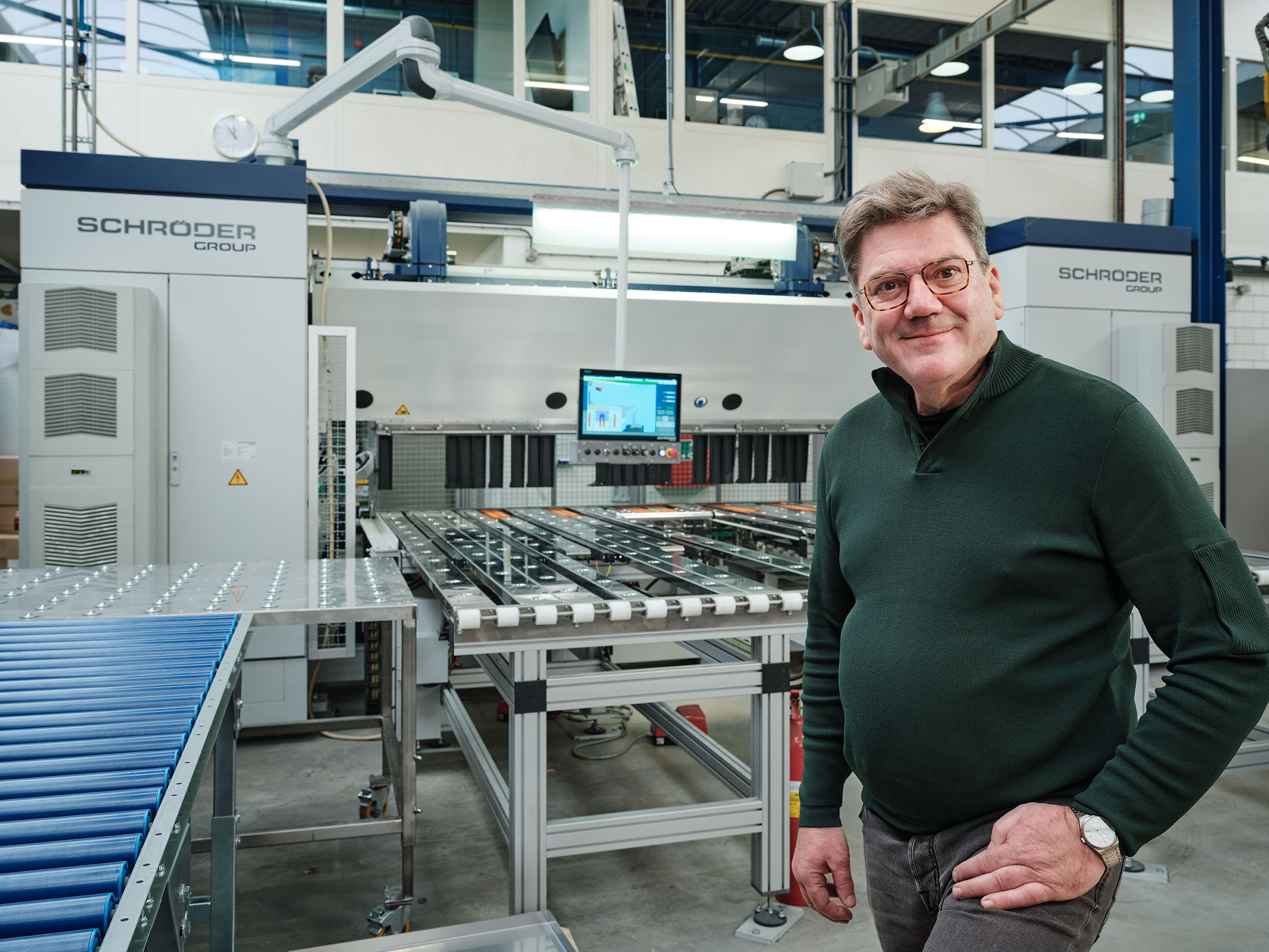
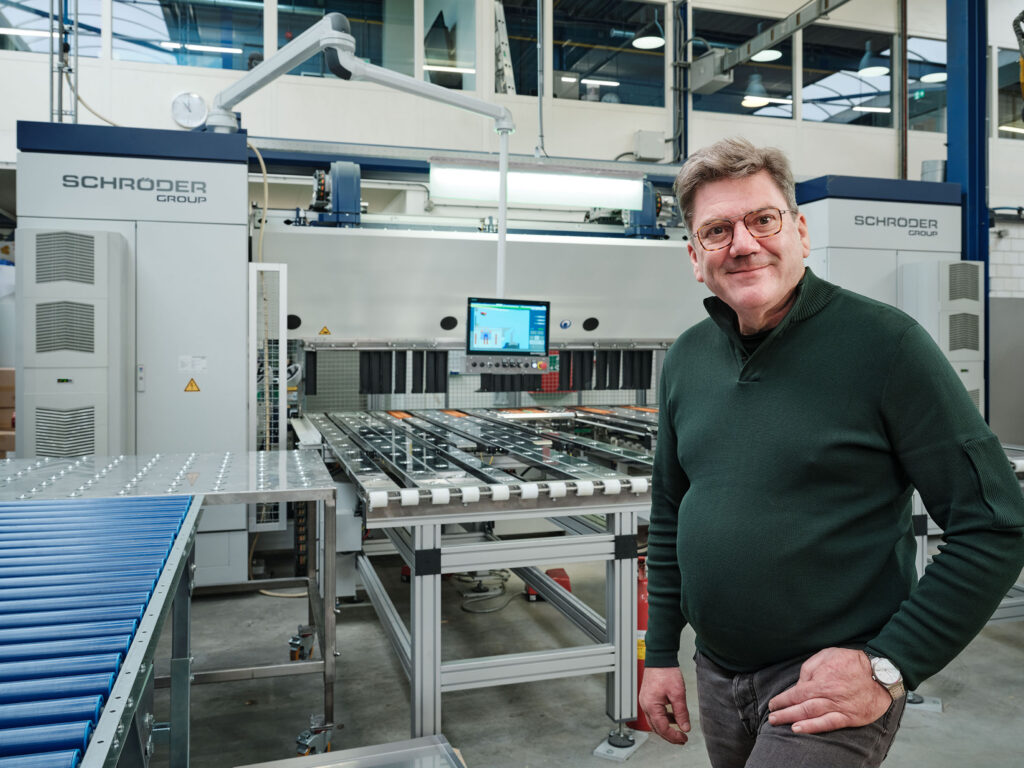
MAK4 Evolution UD folding machine at Staka Metallics B.V.
User
Staka develops and manufactures high-quality stainless steel switch cabinets and flat roof access hatches. A comprehensive program launched in 2024 was designed to increase efficiency, quality, and delivery reliability, and to ensure healthy growth for the Oosterhout-based company in North Brabant. The precise MAK4 Evolution 3200 x 6 UD press brake, affectionately nicknamed “Heidi” by its operators, plays an important role in this. (https://staka-schakelkasten.nl/)
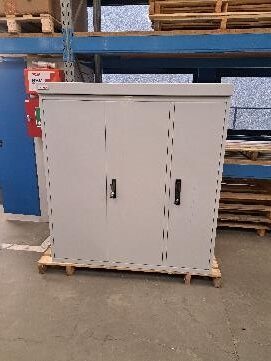
Staka switch cabinets and flat roof hatches are made of high-quality stainless steel and are available with various coatings depending on requirements. They withstand extreme weather conditions and offer long-term protection against corrosion, vandalism, and wear. With a service life of around 20 years, they are a sustainable solution for a wide range of applications. When former production manager Richard van Vorstenbosch was promoted to COO in 2024 and thus joined the company’s management team, he was confronted with a number of challenges: “To be honest, production results were very inconsistent at the time. This indicated insufficient process control, and if you looked closely, you could see a ‘hidden factory’ where goods were being returned to a previous step against the flow. My conclusion was that we had to close this factory! The time was ripe to work differently in various areas. From purchasing to the deployment of our employees and processes to our machinery.”
Goal: Get it right the first time
The fact that repeated reworking was necessary to achieve the desired quality also had a negative impact on delivery reliability—an extremely important aspect for both product lines: Customers want their switch cabinets, which they configure individually on the Staka website, delivered just-in-time, and in the case of roof hatches, final assembly even depends on the weather forecast and the availability of a crane. One of the reasons for the fluctuations in quality was that the folding machine in operation had reached the end of its service life after years of use at full capacity. Regarding the renewal of the machine park, van Vorstenbosch says: “As a member of the executive board, I visited various suppliers and took an operator and a work planner with me to the meetings. The operator must be convinced that it is a good machine, and the work planner can assess whether the machine is easy for us to program. If either of them says ‘no,’ the purchase is not made.”
Off to Bavaria
There were two manufacturers of sheet metal forming machines to choose from. When the team visited the Hans Schröder Maschinenbau factory in Wessobrunn-Forst, Upper Bavaria, a preference for the MAK4 Evolution industrial folding machine had already emerged. To test the suitability of the Schröder machine for everyday use, all employees who were to work with it traveled to the factory and produced parts typical of Staka. The sheet metal experts were impressed by the ease of programming Schröder’s proprietary control system and the operation of the machine. Two features immediately spoke in favor of the MAK4 Evolution: 800 mm of free space compared to 500 mm on the competitor’s machine, and the power reserve. The largest sheets that Staka processes measure 3000 x 150 mm, with thicknesses varying between 2 and 3 mm. The fact that the 3200 mm wide version of the MAK4 Evolution can easily bend 4 mm thick stainless steel sheets gives Staka the assurance that the folding machine will never be overloaded, even in continuous operation.
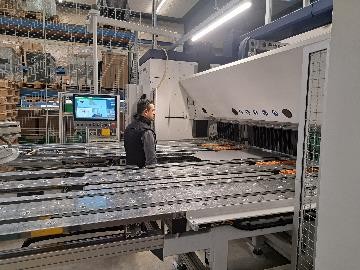
Another argument in favor of this machine was the bidirectional folding beam in combination with the suction plate stop. Once the stop is engaged, the machine automatically performs all folding and counter-folding operations on one side. The fact that the sheet metal does not have to be turned manually in between operations is an ergonomic advantage that should not be underestimated. Another equipment option was selected when the decision was made to purchase the machine: the fully automatic tool changer with two asynchronously movable gripping units. This not only makes the work easier for the operators from an ergonomic point of view, but also speeds up setup processes. Staka uses “Heidi,” as the machine was christened due to its Alpine origins, in two shifts, achieving 13 to 14 hours of pure production time per day.
On the road to success
At the end of 2022, Dutch investment/private equity firm OxGreenfield acquired shares in Staka and subsequently contributed its experience in strategic management consulting. The optimization approaches mentioned at the outset were very diverse and also concerned, for example, the motivation and training of the 67 employees, 55 of whom work in production. “We want everyone at Staka to be full of energy and have prospects. We have achieved flexibility in the production process by making employees more versatile. If someone normally never welds but would like to become a welder, we also promote flexible deployability financially and offer training. This gives that person energy, makes the work more varied, and ensures that someone is more versatile,” explains van Vorstenbosch. The goal is for every employee to be able to work at three stations.
Staka introduced lean production principles, and when the Schröder swing bending machine was delivered in March 2025, it was given its place in the revised factory layout as one of the stations between laser cutting, welding, assembly, and powder coating. The Staka COO sums up the transformation: “We have chosen our priorities: safety, good personnel deployment, quality, delivery time, and only then do costs come into play. In the past, we only looked at sales, but today we look at quality, reliability, and sustainability. And that pays off: production is calm and relaxed, we have no bottlenecks, and we generate ten percent more sales with the same number of people.”
Precision led to a new offer
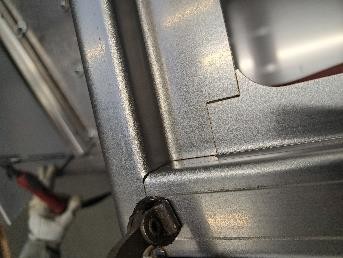
Improvements are also planned for the products. Staka is committed to researching and developing new coatings based on natural resins and with lower curing temperatures. The accuracy of the MAK4 Evolution played a significant role in improving the switch cabinets. Tolerances of ± 0.5 mm enable better fits and thus better weld seams. The improved quality of the cabinets opened up a new business area: burglar-proof enclosures. The resistance class WK4 according to DIN 18106:2003-09 was tested by the Dutch military police because the customer was a military client. WK4 means that the control cabinet can withstand break-in attempts with crowbars, hammers, and chisels or a cordless drill for ten minutes. “To our surprise, we met the standard right away and thus had a new business area,” recalls van Vorstenbosch.
Machine used
MAK4 Evolution UD
- Folding machine up to 6 mm sheet thickness (400 N/mm²)
- 3240 mm working length
- Clamping beam stroke 1090 mm
- Graphic control POS 3000 3D
- Automatic tool changer with hydraulic tool clamping
- Up-and-Down folding beam
Published in:
Metaalnieuws online 2026